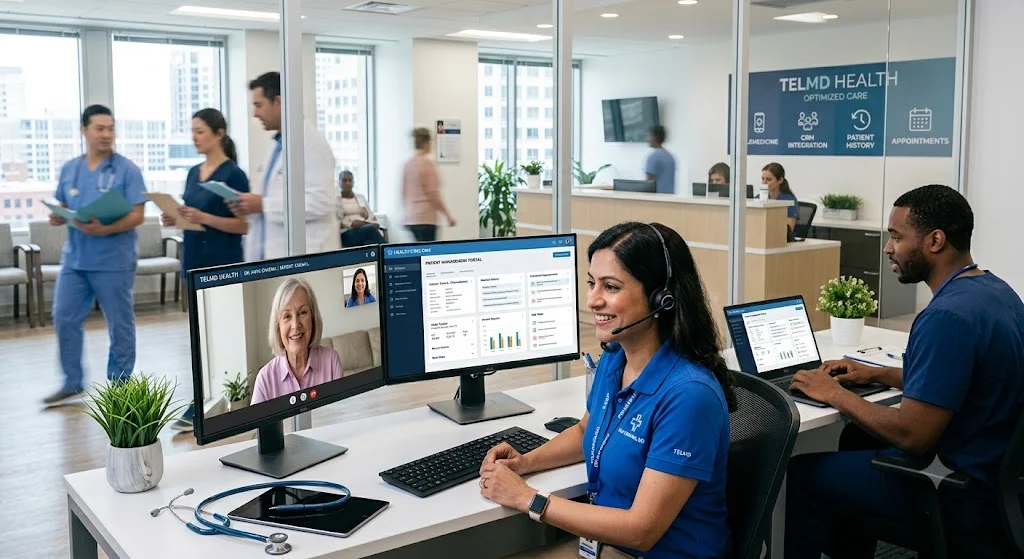
The rapid acceleration of digital health has fundamentally shifted patient expectations. Today’s patients do not just want quality medical care; they expect a seamless, friction-free digital experience. They want to book appointments online, consult with specialists via video, and access their medical records securely from their phones.
For healthcare providers, managing this complex, multi-channel journey is a massive operational challenge. Traditional CRM platforms built for retail or B2B sales simply do not cut it.
To bridge this gap, the industry is rapidly turning toward Healthcare CRMs (H-CRMs)—specialized platforms built from the ground up to handle patient management, telemedicine, and strict clinical compliance.
The Core Blueprint of a Healthcare CRM
Unlike a standard sales CRM that tracks leads and deals, a Healthcare CRM is designed around the Patient Journey. It acts as a secure, central repository that unifies clinical data, communication history, and scheduling into a single pane of glass.
[Patient Portal / Web Intake] ──> [H-CRM Triaging & Routing] ──> [Secure Telemedicine Visit]
                                                                        │
[Proactive Nurturing & Follow-up] <── [EHR Integration & Rx Orders] <───┘
4 Critical Pillars of Modern Healthcare CRMs
To deliver value in a clinical setting, an H-CRM must seamlessly execute four foundational functions:
1. Ironclad Compliance and Security (HIPAA & GDPR)
In healthcare, data security is non-negotiable. Standard CRMs can expose providers to catastrophic legal liabilities if sensitive health data is leaked.
-
BAA Agreements: True H-CRMs sign Business Associate Agreements (BAAs), legally binding them to safeguard Protected Health Information (PHI).
-
Advanced Encryption: Data is encrypted both in transit and at rest, using strict access controls so only authorized clinical staff can view specific patient records.
2. Seamless EHR / EMR Interoperability
A CRM that exists in a silo is useless to a doctor. Modern H-CRMs use advanced integration protocols like HL7 and FHIR to sync directly with Electronic Health Records (EHR) systems.
-
Real-time Updates: When a doctor updates a patient’s diagnosis or medication in the EHR, the CRM instantly updates its outreach workflows, ensuring the patient receives the correct follow-up instructions.
3. Integrated Telemedicine and Virtual Care
Telemedicine has evolved from a simple video call to a fully integrated clinical experience.
-
Pre-Visit Intake: Automated, HIPAA-compliant digital intake forms collect symptoms and consent before the call begins.
-
Asynchronous Touchpoints: Patients can securely message their care team, upload photos of a rash, or check lab results directly within a secure patient portal.
4. Proactive Care Management & Remote Patient Monitoring (RPM)
The industry is shifting from reactive care to proactive health management.
-
IoT & Wearables Integration: H-CRMs can ingest real-time data from wearable medical devices (like blood pressure cuffs or continuous glucose monitors). If a patient’s vitals cross a specific threshold, the system automatically alerts the clinical team for early intervention.
Leading Healthcare CRM Platforms on the Market
Depending on the scale and clinical specialty of your practice, different software suites offer distinct advantages:
The Care Metric: The ultimate goal of a Healthcare CRM is to reduce “documentation fatigue”. By automating patient intake, reminders, and billing updates, doctors can spend less time typing on screens and more time looking at patients.
Conclusion: The New Front Door of Medicine
The medical clinic of the future does not start at the physical waiting room; it begins at the digital patient portal.
Implementing a specialized Healthcare CRM allows clinics to scale virtual care without sacrificing the human element. By automating the tedious administrative steps, healthcare providers can deliver highly personalized, continuous, and timely care that keeps patients healthy and loyal for years to come.

